How I Scored a 9.0 in IELTS Listening Using WELE's Dictation Method

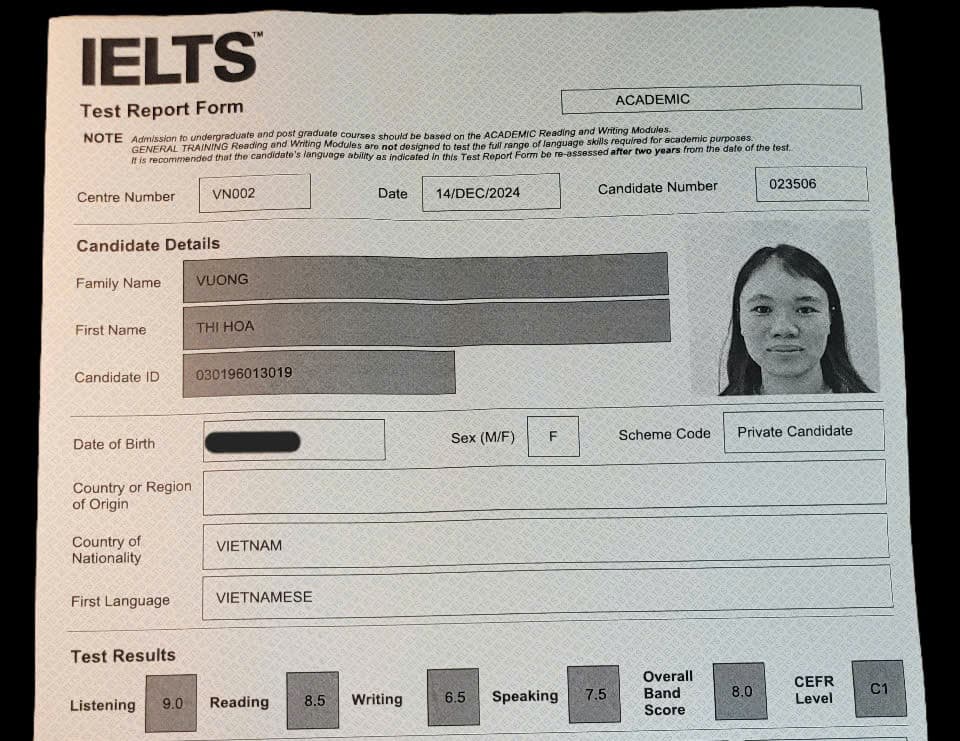
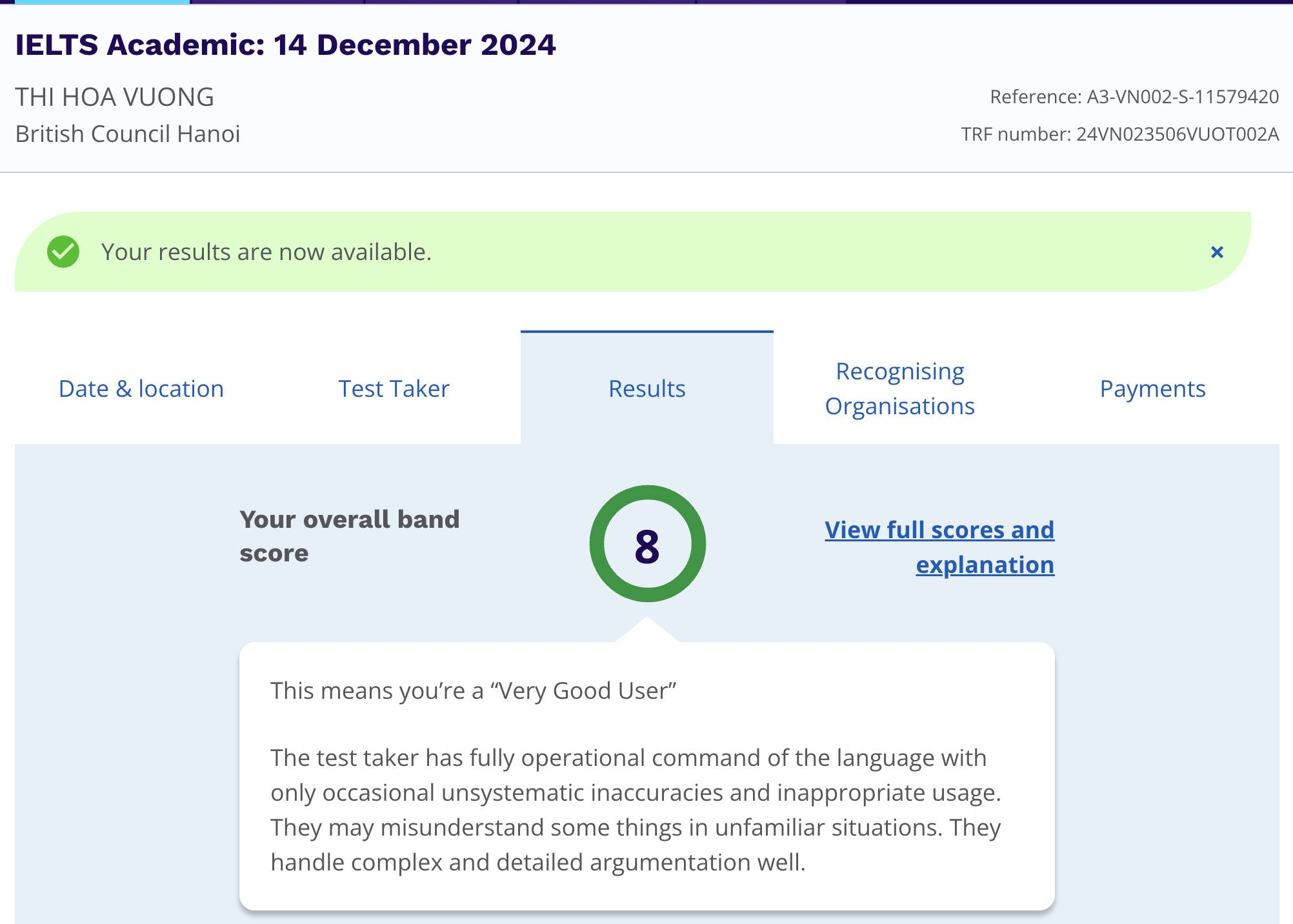
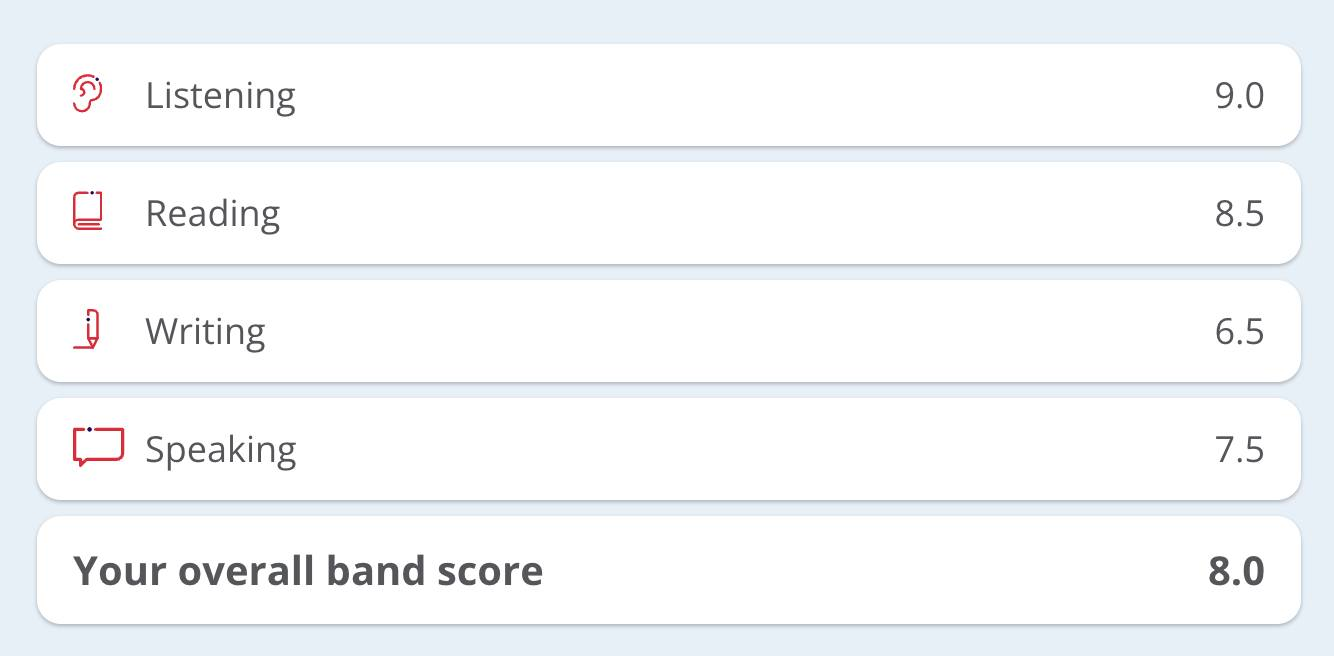
Last time I shared how to use WELE to improve Listening skills. Today I just got my second IELTS score, and luckily I hit my target. Today's post will share the detailed roadmap I followed to reach my current Listening score, hoping it will inspire you to keep trusting WELE.
I. Overview
August 2019: I took an IELTS course from a friend, and that time I scored an overall of 6.5, with Listening at 7.0 (I studied listening using the dictation method).
December 2024: I studied entirely on my own, overall 8.0, Listening 9.0 (I studied listening through dictation, podcasts, and English stories).
II. Detailed roadmap
1. Self-studying English at university and ... failing
I was a Block A student (Math, Physics, Chemistry track), and my English was shaky, hovering around a 6 or 7 all through middle school and high school (back then we only studied grammar; the teacher would play the radio for a few clips of English conversation, but I had no idea what they were saying =))). When I got to university, part of the reason was that there weren't as many quality review posts back then as there are now, and part of it was that I was stubborn and wanted to self-study English. But because I was lazy, the only thing I actually learned over those years was English pronunciation. =)).
Around my 3rd or 4th year of university, I found out about WELE. Back then WELE didn't have the fancy tools it has now, but WELE's super enthusiastic admin team encouraged me to do dictation into a Word file and send it to WELE's shared email — but my listening level was so poor back then that I could never get through a single Spotlight episode no matter how long I listened, so it took a whole 2 years just to submit 25 Spotlight dictations to WELE.  (And that was only thanks to the super sweet + incredibly hardworking admin brothers and sisters who kept messaging to encourage me that I managed to submit even that many)
2. Signed up for an IELTS course, and my English was still .... terrible
After graduating from university, I wanted to work at an English center, so I had no choice but to take a course to get a certificate. I was so naive back then (or to put it bluntly, stupid and clueless =))), thinking that a 6.5 or 7.0 in IELTS meant you had to be amazingly fluent in English — like watching movies without subtitles, blah blah... I signed up for an IELTS course and spent all day drilling practice tests (even though I hated drilling practice tests); I could follow Part 1 okay, but once it got to Part 2, 3, 4, I was completely lost. But since I felt bad about the money I'd spent, I forced myself to finish the whole course. On top of that, I'd also heard a lot about the benefits of the dictation method, so I decided that for every practice test I had to do, I would transcribe the entire thing by dictation. As a result, I was in a class with 5 other students — I got 6.5 overall, while the others scored around 5.0, 5.5 or so.
3. Journeying with WELE
In August 2019, when I got my IELTS score — a 7.0 in Listening, no less — I realized that .... my English was still really, really bad. I couldn't understand movies, I still didn't understand even with subtitles on, and my vocabulary was still super super limited. And I genuinely felt lost on the path of learning English...
Luckily, thanks to the encouragement of WELE's sweet admin brothers and sisters, I reached the milestone of 25 dictation listening exercises in December 2019... Then, around that time, Hiếu messaged me and invited me to become an admin. Oh, I was so happy then, even though I told him that my English was really poor and I didn't know if I could handle being an admin — but he encouraged me, saying that at first I could just do tasks that didn't require much English, and I'd level up later. So I've stuck with the WELE admin team from that time until now. A long and meaningful journey.
From December 2021 to November 2023 (after which I passed the torch to my younger sister), I started writing the Spotlight introduction posts for WELE. During that time I went through the listening scripts very carefully, looked up every word I didn't understand (if I came across a difficult phrase, I'd message the admin group and ask the others to explain), and I also had my younger sister listen to the Spotlight episodes, asking her to translate them so I could correct her translations. On top of that, I kept doing dictation on WELE (once I could get around 90% accuracy on Spotlight, I'd move on to English at Work, 6 Minute English, TED, etc.). This way, my listening ability improved significantly.
By the time I had done dictation for 230 listening exercises on WELE, I started going back and listening to the 6ME episodes a second time, this time speeding playback up to 1.5x.
By the time I had completed 240 listening exercises, I was scoring around 7.0-8.0 on Cambridge (CAM) listening practice tests at home.
4. Other factors
There's a very famous saying in English: "If you want to go fast, go alone. If you want to go far, go together." I had a lot of companions along my English-learning journey: first, WELE; second, a female colleague at my company; third, my younger sister; and fourth, the students I taught. My colleague and I started out at about the same level (both knowing basically nothing), so the two of us studied vocabulary together from English Vocabulary In Use, studied grammar from English Grammar In Use, practiced speaking English together, and sent each other assignments every day to keep ourselves disciplined about studying English, etc. I also taught my younger sister and a few other students, so my English improved through those activities too.
I like the Harry Potter books, so after reading them in English, I also listened over and over to the audio of my favorite parts in English. I also enjoy listening to English podcasts, which helped me a lot too. (Note: I only did these activities once my dictation scores for 6ME, English at Work, and TED were around 85-95%. Back when I was listening to Spotlight, I couldn't handle English podcasts — I wanted to listen but understood nothing =]] )
Of course, I can't skip over the test-practice phase, but the time I spent on practice tests was only about 1/10 of the time I spent on dictation + podcasts and so on. =)))
5. Summary
WELE is a tool for listening practice, so learning other skills requires you to seek out additional resources. However, learning English always comes down to the fact that you have to master the input skills (Listening, Reading) before you can learn the output skills (Speaking, Writing). So I hope this post of mine has, to some extent, given you a more detailed perspective on learning English.
I hope you always find joy in learning English with WELE! See you in future posts!
Original link: https://www.facebook.com/groups/welelearn/posts/3448246028642770
Other posts about Ms. Vương Thị Hoa
