
Why Are Defective Beans Removed?
- Level: Level B2
Imagine you buy a bag of cherries and bring it home. You open it and see that most of the cherries are plump and red, but mixed in are a few bruised ones, a few with wormholes, and one that’s gone moldy. What would you do? Of course, you’d pick them out. It’s the same with coffee, but the consequences of not removing them are much more serious.
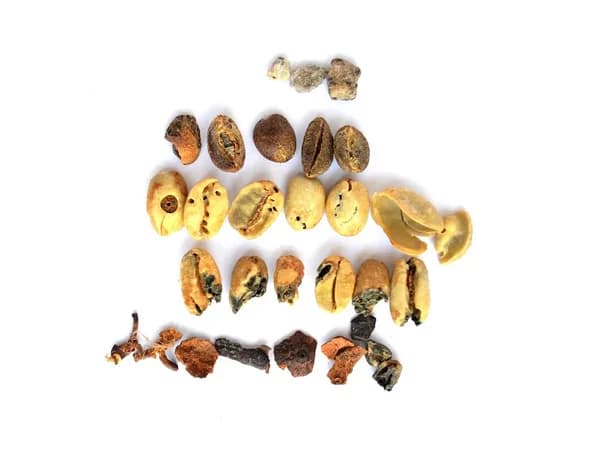
In the coffee industry, defective beans are called defect /ˈdiːfekt/ (defective bean) . They may be black /blæk/ (black) beans, caused by over-fermentation on the ground. They may be beans with insect damage /ˈɪnsekt ˈdæmɪdʒ/ (insect damage) , with tiny holes on the surface. They may be immature /ˌɪməˈtʃʊə/ (unripe) beans, picked when the fruit is still unripe, still pale green and astringent in taste. Or they may be broken /ˈbrəʊkən/ (broken) during the hulling process.
The problem is that just one defective bean can be enough to ruin the flavor of an entire cup of coffee. Black beans produce a harsh /hɑːʃ/ (harsh, unpleasant) taste, immature beans give an astringent /əˈstrɪndʒənt/ (astringent, drying) taste, and moldy beans bring a musty /ˈmʌsti/ (musty, moldy) smell that cannot be masked, no matter how dark the roast.
In Vietnam, harvesting both green and ripe cherries is still common due to time pressures and labor shortages during the harvest season. This is one of the main reasons Vietnam’s Robusta defect rate /ˈdiːfekt reɪt/ (defect rate) was once considered higher than that of many other producing countries. But things are changing, and today’s listening will show you why removing defective beans is not just a technical issue, but a matter of survival for the reputation of an entire coffee-producing nation. Let’s listen!
Reviews (0)
WELE does not own the rights to this content. All rights belong to the owner. WELE only uses this content to help users learn English. Contact to request removal of content: [email protected]