
What Does Moisture Mean in Coffee?
- Level: Level B2
If you asked any coffee buyer in the world, "what do you check first when you receive a shipment?", the answer would almost always be: moisture.
It sounds simple, just a number displayed on a meter. But that tiny number determines a lot: whether coffee beans are safe to store, whether their flavor will last or deteriorate /dɪˈtɪəriəreɪt/ (decline) after a few weeks, and most importantly, whether the buyer will agree to pay or reject /rɪˈdʒekt/ (refuse) the entire shipment.
In the coffee industry, moisture content /ˈmɔɪstʃə ˈkɒntent/ (moisture content) is measured as a percentage. Export-grade green coffee beans typically fall within the range of 11 to 12.5%. If they exceed this threshold, the beans are more susceptible to mold /məʊld/ (mold) , producing mycotoxin /ˌmaɪkəˈtɒksɪn/ (mycotoxin) and losing their shelf life /ʃelf laɪf/ (shelf life) . If the moisture level is much lower, the beans become brittle /ˈbrɪtl/ (brittle, easily broken) , lose weight when weighed, and their flavor also becomes flat /flæt/ (bland, lacking depth) .
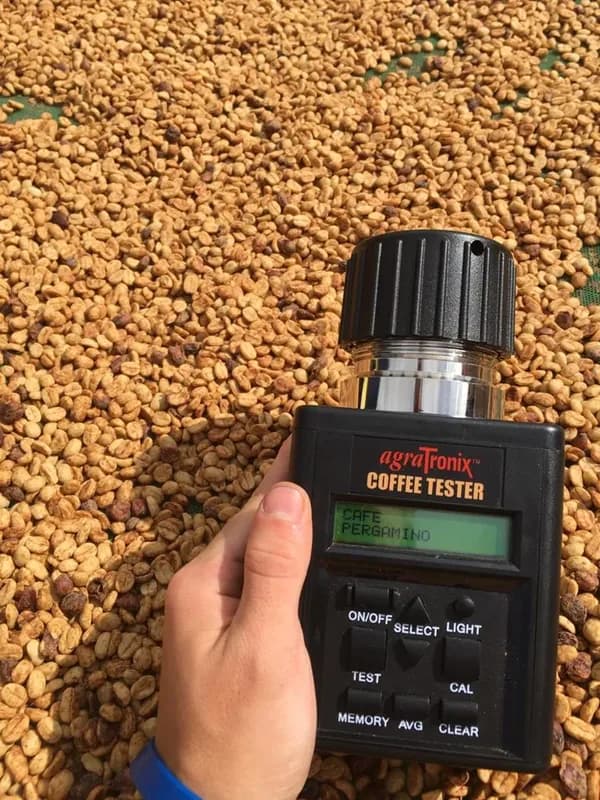
In the Central Highlands, moisture control is a daily challenge for farmers. The harvest season coincides with the start of the dry season, making drying conditions favorable, but if there is unexpected rain or uneven drying, moisture levels among beans in the same lot will be inconsistent /ˌɪnkənˈsɪstənt/ (uneven) . This is why many exporters use a moisture meter /ˈmɔɪstʃə ˈmiːtə/ (moisture meter) to check every bag before storing it in the warehouse.
Today's listening will help you understand why a seemingly boring number is a vital factor throughout the entire coffee supply chain. Let's listen!
Reviews (0)
WELE does not own the rights to this content. All rights belong to the owner. WELE only uses this content to help users learn English. Contact to request removal of content: [email protected]